
Post Crown After Root Canal Treatment: Why It May Be Recommended
A post crown after root canal treatment may be recommended when a tooth has lost significant structure. It helps protect the treated tooth and supports long-term function, depending on individual clinical conditions.
Root canal treatment is a widely used dental procedure performed when the pulp inside a tooth becomes infected or inflamed due to deep decay, cracks, or trauma. While root canal treatment is effective in eliminating infection and relieving pain, it does not fully restore the strength of the tooth.
For this reason, a post crown after root canal treatment may be recommended in certain cases. Understanding when and why a post crown is used can help patients make informed decisions about long-term tooth preservation.
Why Teeth Can Become Weaker After Root Canal Treatment
During root canal treatment, the infected nerve tissue and blood supply inside the tooth are removed. The cleaned canal is then disinfected and sealed. However, by the time a root canal is required, the tooth has often already lost a significant amount of its natural structure.
After treatment, several changes may occur:
-
The tooth no longer receives internal nourishment
-
Remaining tooth walls may be thinner or more fragile
-
The risk of tooth fracture may increase over time
This is particularly important for back teeth (molars), which are exposed to higher biting and chewing forces during daily function.
What Is a Post Crown?
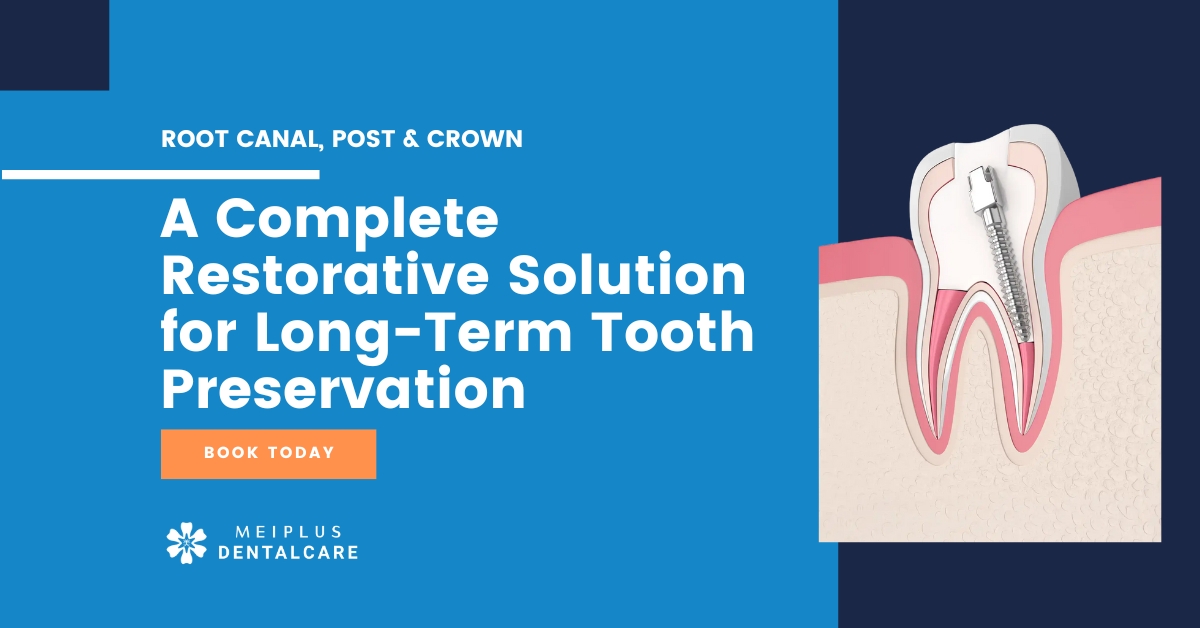
A post crown is a restorative solution used after root canal therapy to help reinforce and protect the treated tooth.
It generally consists of two parts:
-
Post: A support structure placed inside the root canal to help retain the core build-up
-
Crown: A custom-made dental crown that covers the tooth, restoring its shape, strength, and function
The post provides internal support when there is limited remaining tooth structure, while the crown protects the tooth from fracture and wear during normal chewing.
Is a Post Crown Necessary After Every Root Canal?
Not all teeth that undergo root canal treatment require a post crown. The decision depends on a detailed clinical assessment, including:
-
The amount of remaining natural tooth structure
-
Whether the tooth is a front tooth or a molar
-
Bite forces and occlusion
-
Existing cracks or large restorations
For example, front teeth with sufficient remaining structure may only require a crown without a post, while molars often benefit from full crown coverage due to higher functional demands.
Dental X-rays and clinical examination are essential to determine whether a post crown after root canal treatment is appropriate.
Types of Dental Posts Used After Root Canal Treatment
Different post systems may be used depending on the condition of the tooth:
-
Fibre posts, which are designed to distribute stress more evenly and may reduce the risk of root fracture
-
Metal posts, which may be considered in selected clinical situations
There is no single “best” option for every patient. The choice of post material depends on tooth anatomy, remaining structure, and overall treatment planning.
The Post Crown Treatment Process
The post crown procedure is typically carried out in stages:
-
Completion of root canal treatment
-
Assessment of tooth strength and remaining structure
-
Placement of a post if additional support is required
-
Core build-up and tooth preparation
-
Impression taking and fabrication of a custom dental crown
-
Placement of the final crown
In some cases, a temporary crown may be used while the final crown is being prepared. Treatment time and steps may vary depending on individual circumstances.
Caring for a Tooth with a Post Crown
Although a post crown restores function and protection, the tooth still requires proper care. A crowned tooth is not immune to dental disease.
Patients should:
-
Maintain good oral hygiene with proper brushing and flossing
-
Attend regular dental check-ups
-
Avoid biting on very hard objects such as ice or hard nuts
With good maintenance, a post crown can contribute to long-term tooth stability and function.
A Conservative and Individualised Approach at Meiplus Dentalcare
At Meiplus Dentalcare, post crown treatment following root canal therapy is recommended only when clinically indicated. Each case is assessed individually, with a focus on preserving as much natural tooth structure as possible while ensuring long-term stability.
Treatment recommendations are based on clinical findings, dental imaging, and functional considerations, and patients are provided with clear explanations of their options.
Key Takeaways
-
Root canal treated teeth may become structurally weaker
-
A post crown after root canal treatment may help reinforce and protect the tooth
-
Not every root canal treated tooth requires a post crown
-
Treatment decisions depend on tooth position, structure, and bite forces
-
Proper diagnosis and follow-up care are essential for long-term success
Final Thoughts
Root canal treatment plays an important role in saving a natural tooth, but it is often only one part of the overall restorative process. When indicated, a post crown helps protect the treated tooth and supports its function during everyday use.
If you have had root canal treatment or have been advised about a post crown, a personalised dental assessment can help determine the most appropriate treatment approach based on your specific oral condition.
